


On Thursday, July 3, 2026 the International Summer School “Sustainable Development of the Yachting and Cruise Industry” continued with activities dedicated to sea and coastal pollution, marine water quality and practical monitoring in port environments.
Organised within the Interreg IPA South Adriatic project “High LEVEL and market-respondent competences for a blue and digitalized ‘Smart and skilled South Adriatic’ - SKILLS”, the session was connected with Lesson 7.1: “Introduction in pollution sea and coast” and Lesson 7.9: “Practical exercise: Monitoring quality marine water and biota in ports”.
The lecture and laboratory visit were led by Dr Aleksandra Huter, Scientific Associate at the Institute of Marine Biology, University of Montenegro.
Participants were introduced to key physicochemical parameters of seawater and their importance for understanding the quality, functioning and ecological condition of marine ecosystems. The session covered physical parameters such as temperature, salinity, turbidity, conductivity, density, water transparency, waves, currents and tides, as well as chemical parameters including pH, dissolved oxygen, dissolved carbon dioxide, alkalinity, nutrients, organic matter and trace elements.
Special attention was given to the role of nutrients such as nitrates and phosphates. Participants discussed how nutrient levels support marine productivity, but can also cause eutrophication when present in excessive concentrations, particularly as a result of wastewater discharge, agricultural runoff, industrial effluents and aquaculture activities.
The lecture also addressed the main effects of marine water pollution and changes in water quality, including ocean acidification, reduced dissolved oxygen, increased turbidity, altered salinity and temperature regimes, nutrient accumulation, harmful algal blooms, habitat loss, biodiversity decline and disruption of marine food chains.
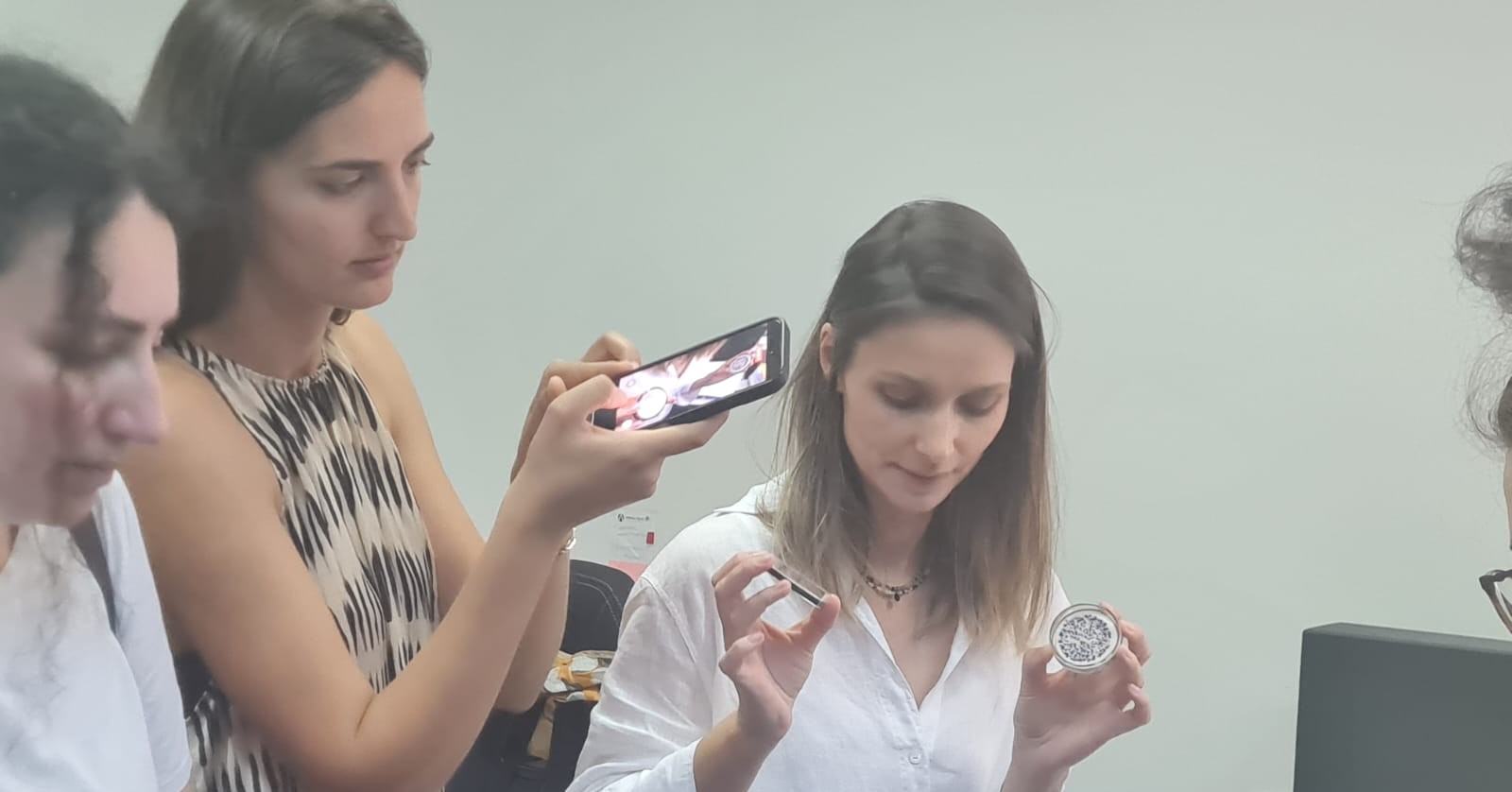
A practical part of the activity included a visit to the laboratories of the Institute of Marine Biology. Participants had the opportunity to learn how marine water samples and biota are collected, processed and analysed, and how laboratory data are used to assess environmental pressures in ports, marinas and coastal areas.
The laboratory visit helped participants connect theoretical knowledge with real scientific practice. It also demonstrated the importance of regular monitoring, reliable data and scientific expertise for protecting marine ecosystems and supporting sustainable maritime tourism.
Through this activity, the Summer School highlighted that green marinas and cruising ports cannot be developed without a strong understanding of marine environmental quality. Monitoring seawater and marine biota is essential for detecting pollution, preventing ecosystem degradation and supporting responsible management of coastal and port areas.
By combining lectures, laboratory learning and practical examples from the Institute of Marine Biology, the SKILLS project continued to strengthen cross-border education and develop competencies for a smarter, greener and more sustainable South Adriatic Blue Economy.