


On Friday, 3 July 2026, the International Summer School “Sustainable Development of the Yachting and Cruise Industry” continued with practical and theoretical activities within Thematic Module 7: Green Marinas and Cruising Ports.
Organised within the Interreg IPA South Adriatic project “High LEVEL and market-respondent competences for a blue and digitalized ‘Smart and skilled South Adriatic’ - SKILLS”, the session was delivered by Prof. Danilo Nikolić from the Faculty of Maritime Studies, University of Montenegro.
The programme focused on Lesson 7.4: “Influence yachts and cruisers on pollution sea and coast”, Lesson 7.8: “Practical exercise: Monitoring quality air in proximity port”, and Lesson 7.9: “Practical exercise: Monitoring quality marine water and biota in ports”.
Prof. Nikolić introduced participants to the main forms of pollution from maritime transport, including emissions to the atmosphere, oil and oily waters, sewage and other wastewater, ballast water, antifouling compounds, solid waste, operational residues, underwater noise and greenhouse gas emissions. The lecture also addressed the wider environmental context, highlighting the importance of oceans for climate regulation, food supply, oxygen production, carbon dioxide absorption and the protection of coastal ecosystems.
Special attention was given to the environmental impacts of yachting and cruise activities in sensitive maritime areas. Participants discussed how vessel operations can affect air quality, water quality, marine biodiversity and coastal communities, especially in semi-enclosed and high-value destinations such as the Bay of Kotor.
The session also presented the regulatory framework for preventing pollution from ships, including the MARPOL Convention and its annexes related to oil, sewage, garbage and air emissions, as well as other relevant international instruments addressing antifouling systems and ballast water management.
A practical component of the programme focused on environmental monitoring in port areas. Participants explored how air quality can be monitored in the proximity of ports and how marine water quality and biota can be assessed as indicators of environmental pressure. These exercises helped connect theoretical knowledge with real monitoring needs in marinas, cruise ports and coastal destinations.
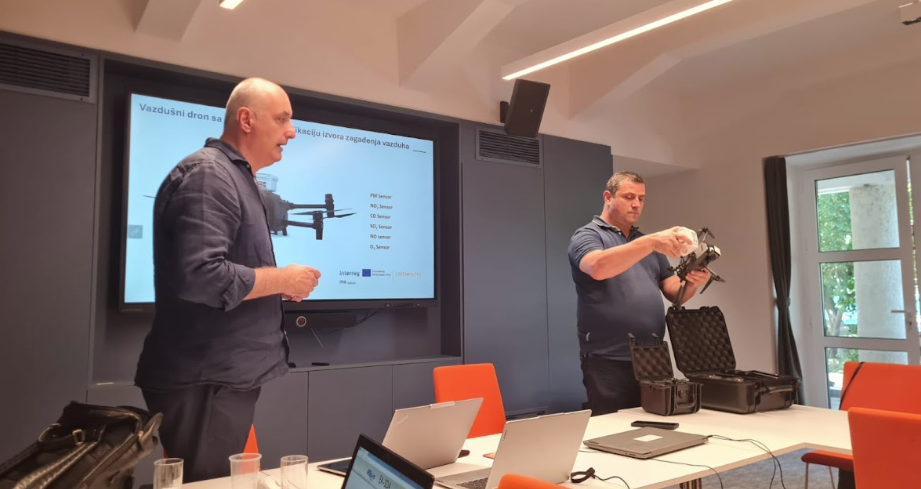
The activity also included a demonstration of drone use for environmental monitoring. Participants were introduced to how drones can support observation of port areas, vessel activities, coastal zones and environmental conditions, providing useful visual data for monitoring, planning and decision-making.
Through this session, participants strengthened their understanding of the relationship between maritime transport, environmental pressure and sustainable port and marina management. The activity highlighted the importance of prevention, monitoring, regulation, technology and professional responsibility in reducing the environmental footprint of yachts, cruise ships and other maritime activities.
By combining lectures, practical exercises and demonstration of monitoring technologies, the SKILLS project continued to support cross-border education and the development of competencies for a smarter, greener and more sustainable South Adriatic Blue Economy.